

A beginner’s guide
How to play pickleball
Pickleball is a paddle sport played on a badminton-sized court with a perforated plastic ball and a solid paddle. The rules take ten minutes to learn. Here is what the game is, what you need to know on your first day, and the handful of habits that separate people who have played twice from people who have played for a season.

The game
What pickleball is
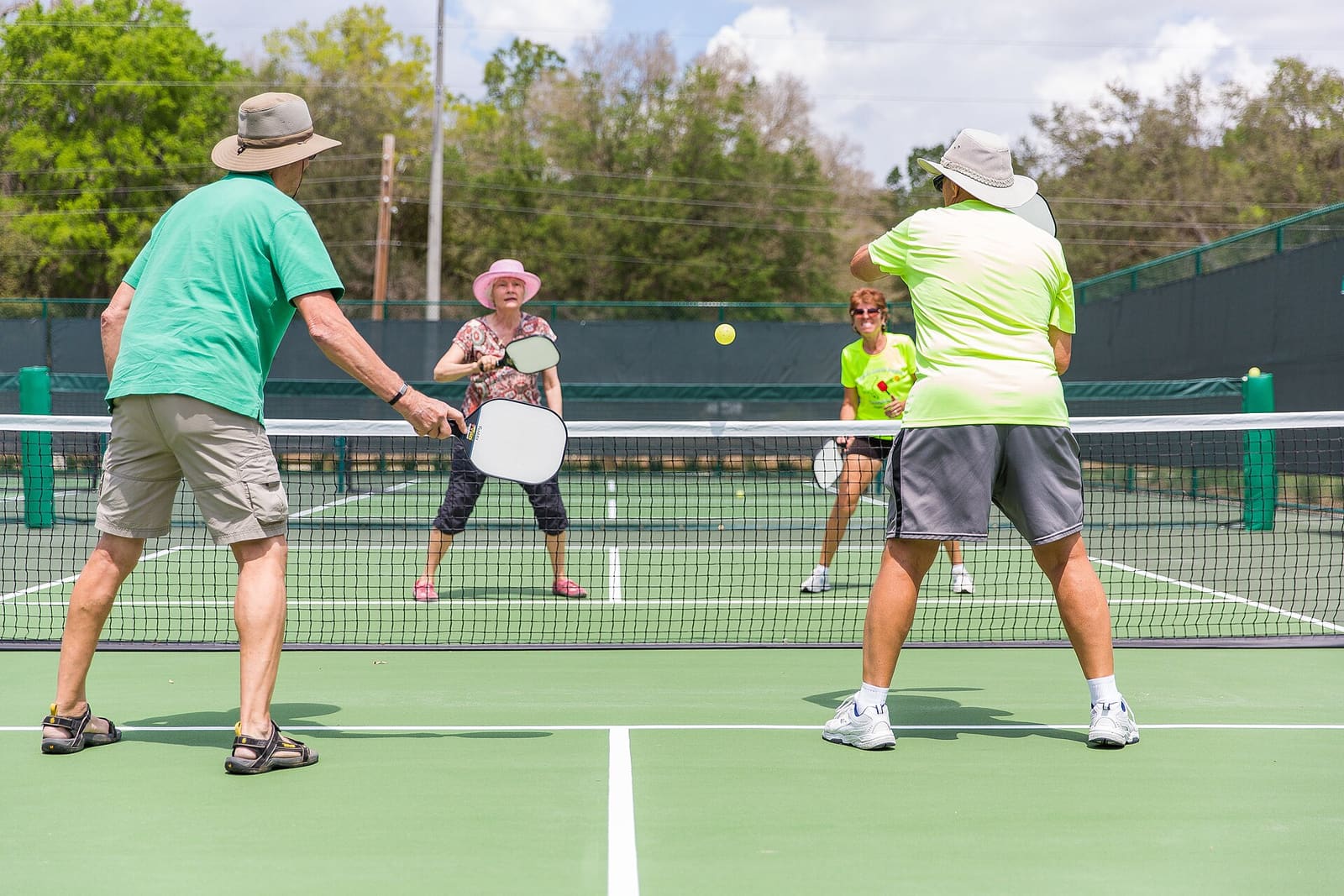
Two or four players hit a plastic ball over a net that is 36 inches high at the sidelines and 34 inches at the centre. The court is 20 feet wide and 44 feet long, the same as a doubles badminton court, and about a quarter the playing area of a tennis court. Most games are doubles. The ball travels slowly enough that rallies are long and points are usually won by placing the ball where an opponent is not, rather than by hitting it hard.
That small court is the reason the sport spread the way it did. Four people can share a space that would hold one tennis singles match, and a beginner can return a serve on their first attempt, which is not true of most racquet sports.
.jpg)
Day-one rules
The rules you need on day one
These are the rules that come up in the first game. The complete set is published by USA Pickleball, and where this page and the rulebook ever disagree, the rulebook is right.
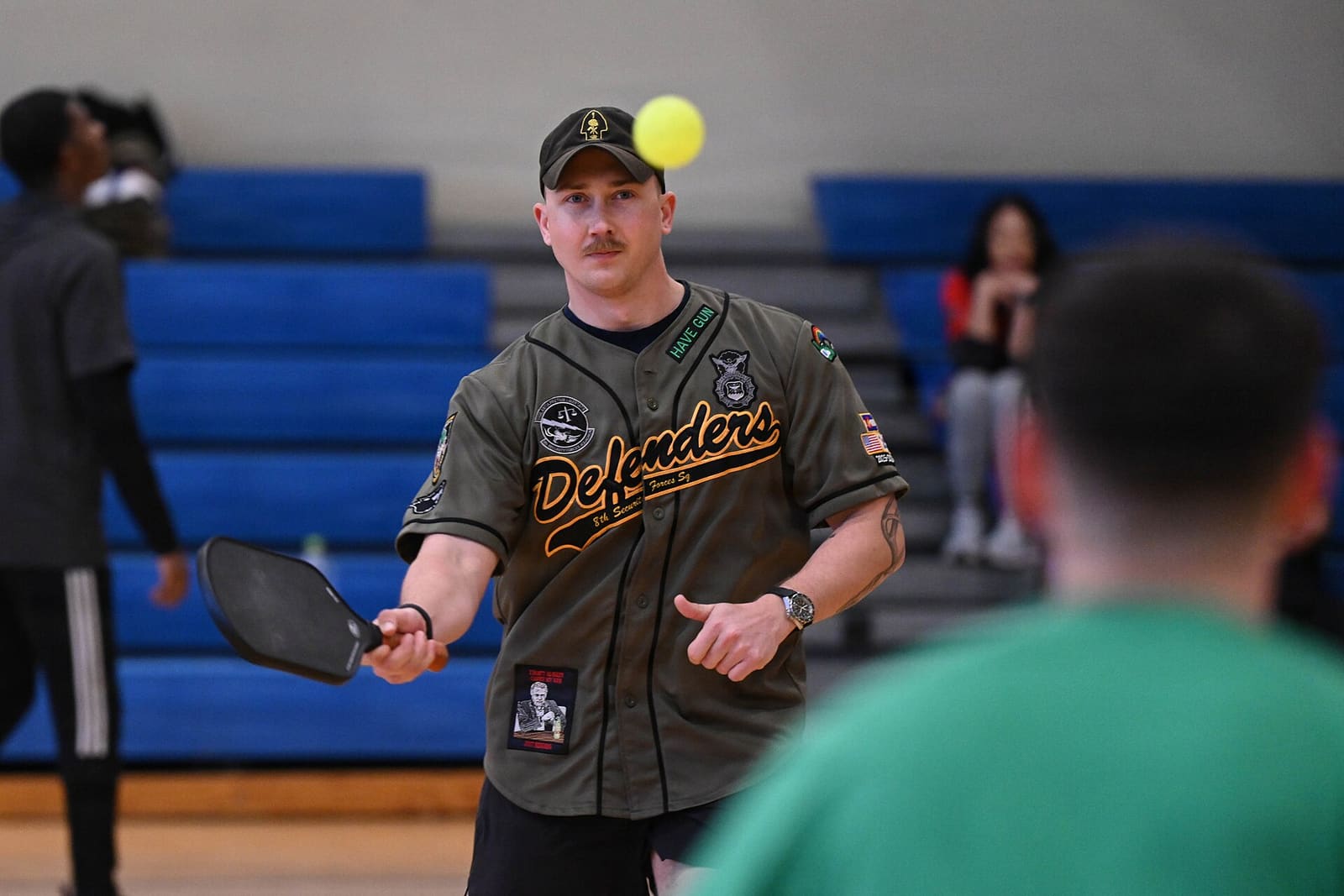
- The serve is underhand. You must strike the ball below your waist with an upward motion, hit it diagonally into the opposite service court, and clear the non-volley zone. You get one attempt, not two.
- The ball must bounce twice before anyone volleys. The return of serve must bounce, and the serving side’s next shot must bounce too. Only after those two bounces may anyone hit the ball out of the air. This is the two-bounce rule, and it is the one beginners forget.
- You cannot volley from the kitchen. The non-volley zone runs seven feet back from the net on both sides. Standing in it is legal; hitting the ball out of the air while any part of you touches it is not, including the line itself.
- Only the serving side scores. Games go to 11 points and you must win by two. In doubles the score is called as three numbers: your score, their score, and whether you are the first or second server.
- The usual faults. Hitting the ball out, into the net, volleying from the kitchen, or breaking the two-bounce rule. A fault by the serving side ends its serve; a fault by the receiving side gives the servers a point.
Rules as published by USA Pickleball, official rulebook. This page summarises; it does not replace it. The full set, in rally order, is on the rules page.

Getting better
How to get better
This is advice rather than fact, and it is the advice most players wish they had been given earlier. None of it needs a coach.
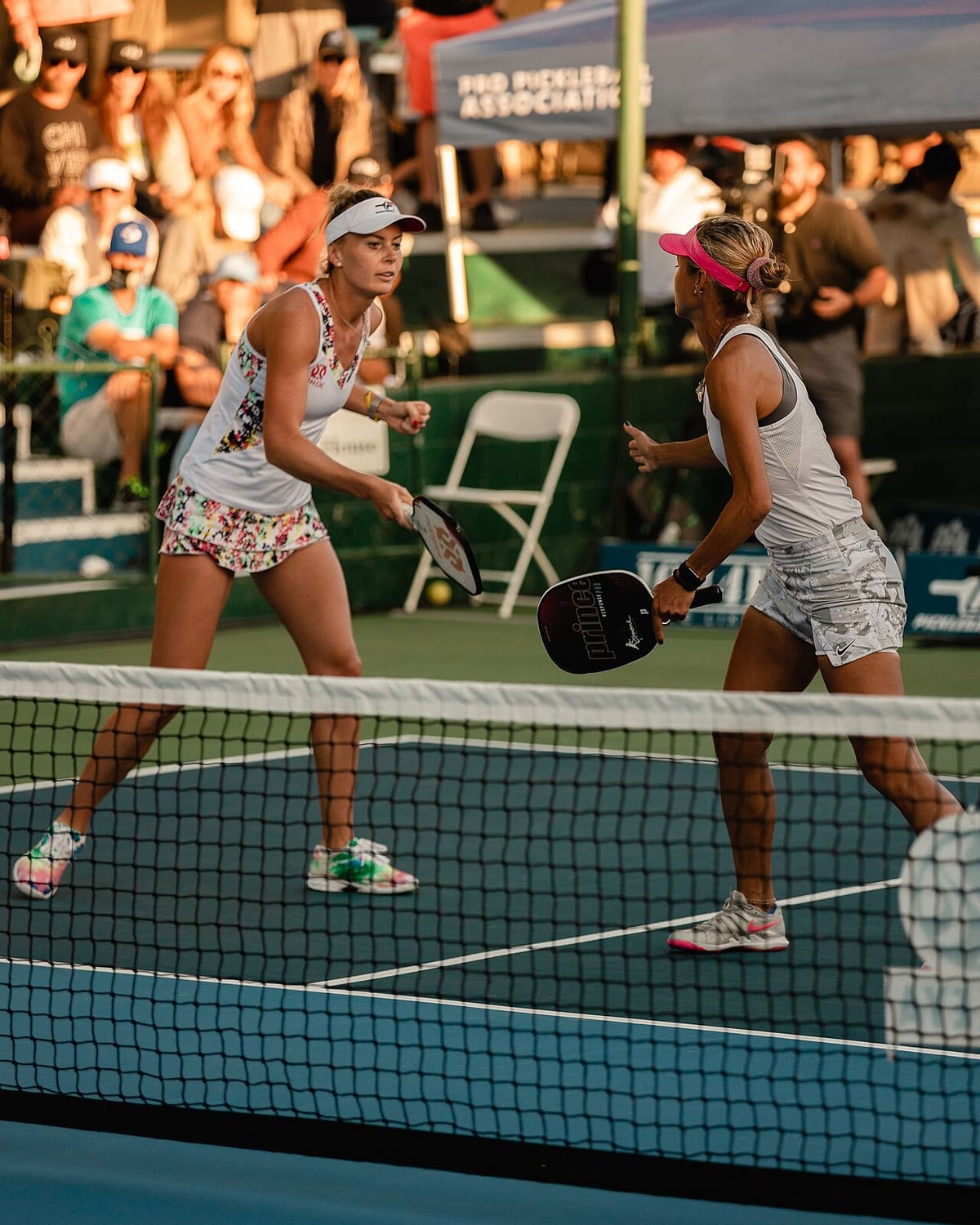
- Get to the kitchen line and stay there. The team standing at the non-volley line wins most points at every level. Move up as soon as the two-bounce rule allows, and move up together with your partner.
- Stop hitting hard. The instinct from tennis is to drive the ball. On a court this small, a hard shot comes back faster than you can recover. A soft ball that lands in the kitchen buys you the time to move forward.
- Learn to dink. A dink is a soft shot that drops into the opponent’s kitchen. Rallies at the net are won by whoever loses patience last. Practising twenty dinks in a row is dull and it is the single fastest way to improve.
- Serve deep, return deep. A deep serve keeps the receiver back. A deep return keeps the servers back and buys you time to reach the net first, which is the whole point of the return.
- Do not stand in the middle. The area between the baseline and the kitchen line is where balls land at your feet. Be at one end or the other, not in transit.
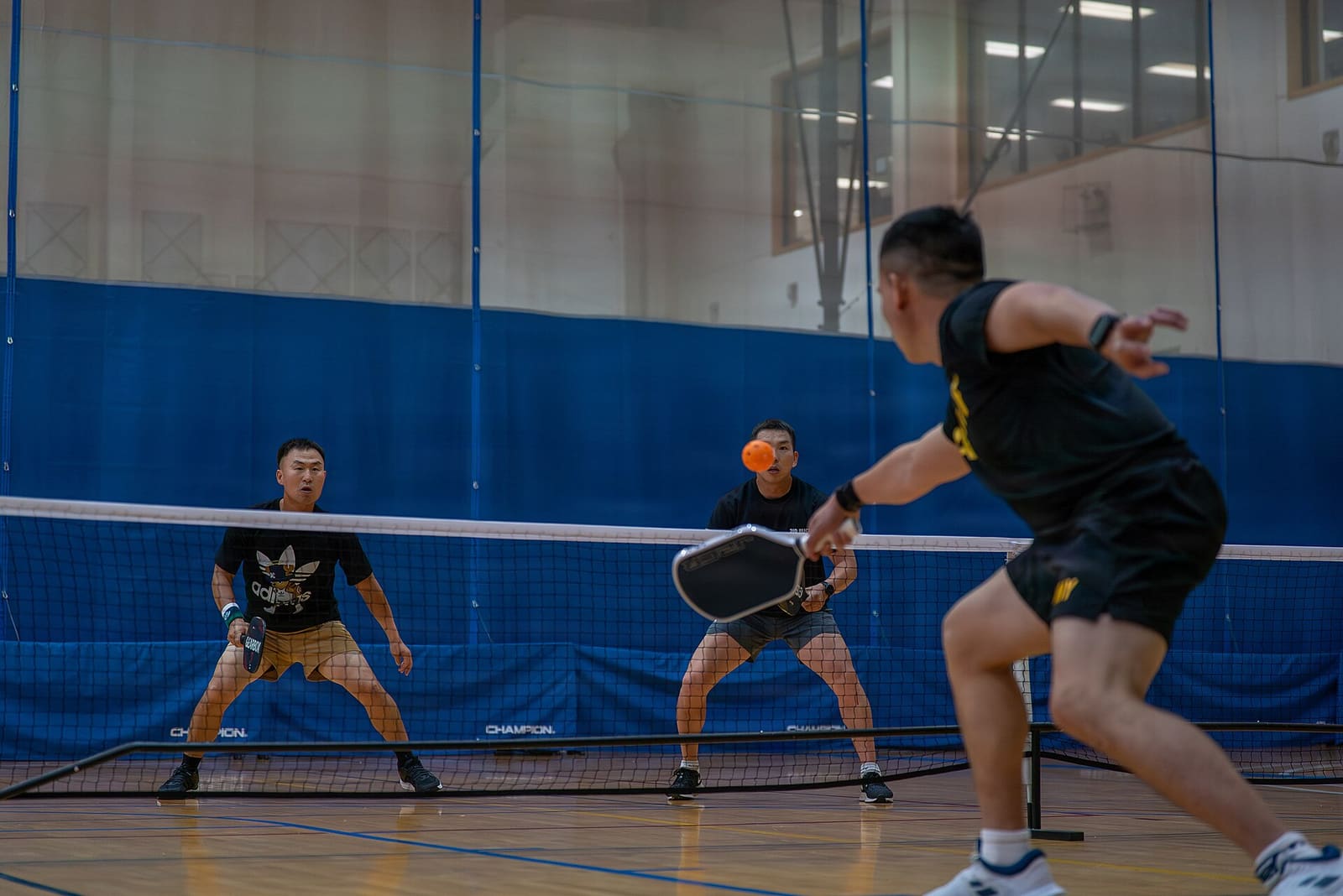
- Keep the paddle up and in front. Ready position is paddle at chest height, pointing forward. Most missed volleys are not reaction speed, they are a paddle that started by someone’s knees.
- Call the ball in doubles. Say “mine”, “yours”, “bounce it” or “out”. Two players who talk beat two better players who do not.
- Play people who beat you. Open play at a public court will put you in games above your level. That is the point. Losing to better players teaches faster than winning against beginners.
.jpg)
Common mistakes
What beginners get wrong
Three mistakes account for most lost points in a first month.
- Smashing every ball that sits up, which sends it long.
- Stepping into the kitchen to volley, which is a fault however good the shot was.
- Standing at the baseline all game, which hands the net to the other team and with it the rally.

Questions
Questions people ask
Is pickleball easy to learn?
The basics take about ten minutes. The court is small, the ball is slow, and the underhand serve is easy to make. Playing well takes far longer, because the game rewards patience and placement over power, which is the opposite of what most newcomers try first.
What do I need to bring?
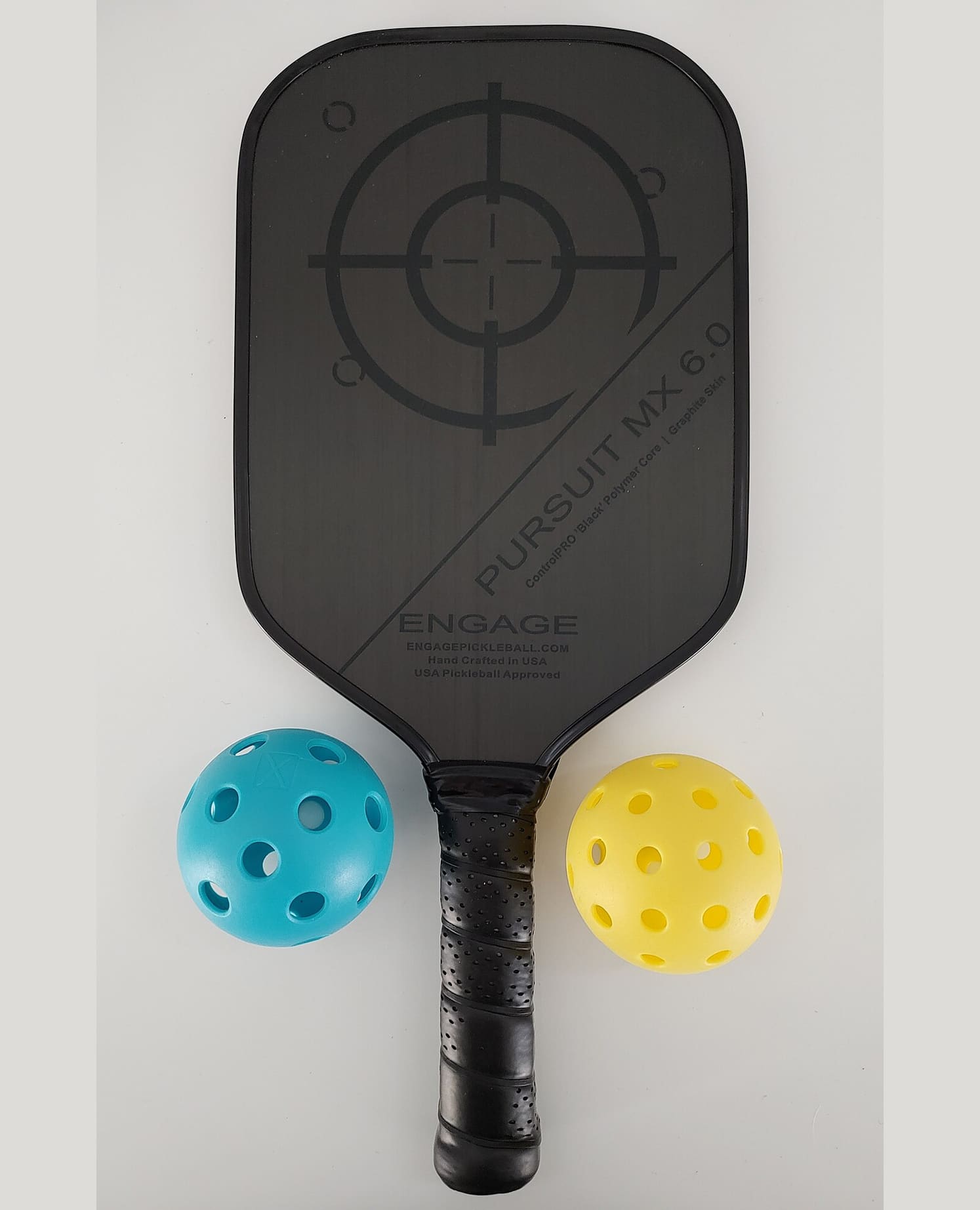
A paddle and shoes you can move sideways in. Balls are usually shared. Whether nets are provided depends on the venue, and many public courts expect you to bring a portable net, so check the venue page before you go.
What is the kitchen in pickleball?
The non-volley zone, a seven-foot strip on both sides of the net. You may stand in it, but you may not volley the ball while any part of you is touching it. Almost every beginner fault happens here.
Can I play pickleball on a tennis court?
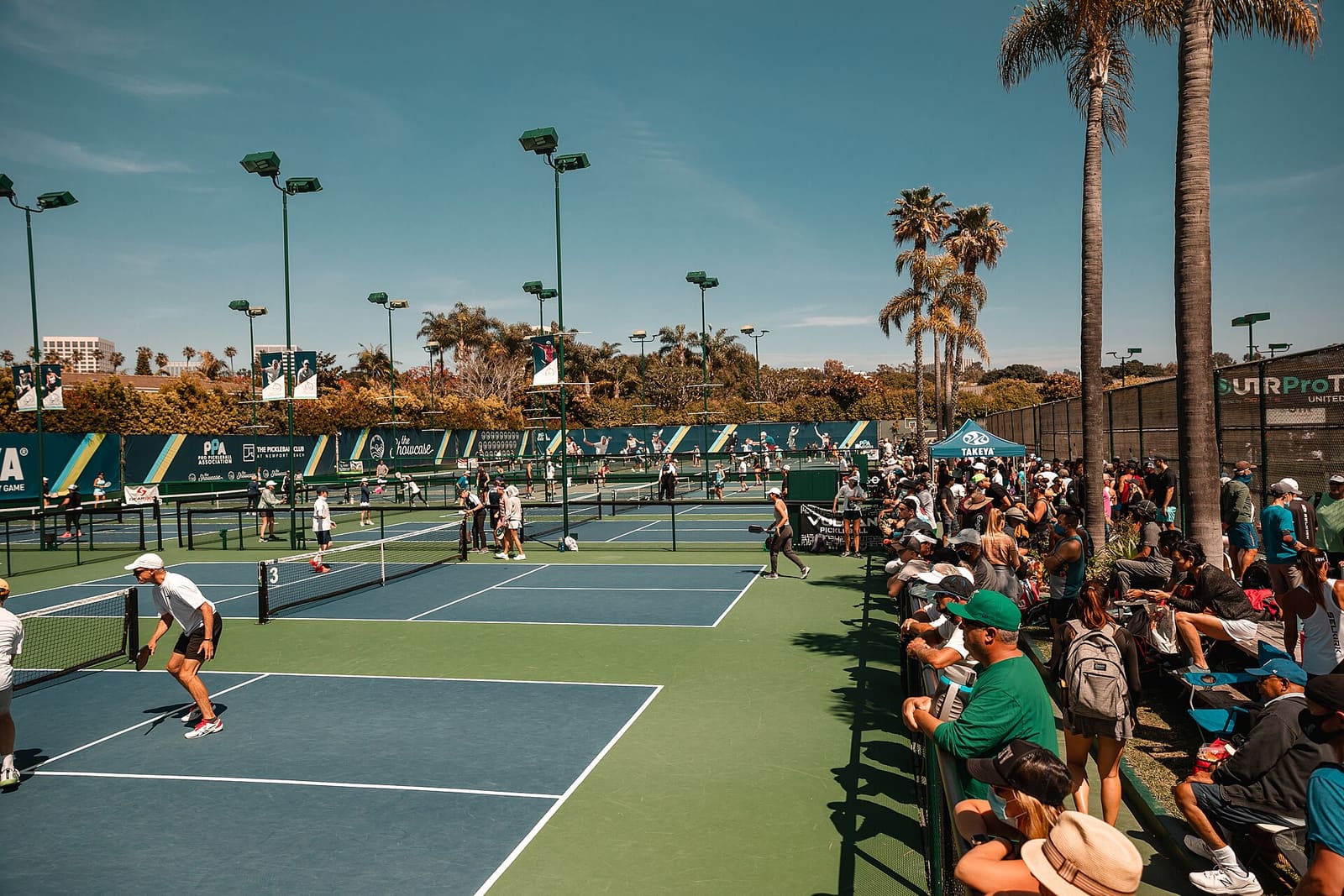
Yes, and most public pickleball in the United States happens on tennis courts with pickleball lines painted on them. A portable net sets the height. Many venues in this directory are exactly that arrangement, and each venue page says whether its courts are dedicated or shared.

Your first game
Now go and play
Reading about pickleball has a short useful life. Every court in this directory has been checked against the operator’s own record, so you can see the court count, whether there are lights, whether nets are provided and what it costs before you drive anywhere.